Home › Crypto Security Blog › Crypto Inheritance
Five things most crypto inheritance guides get wrong. Each correction is checked against the governing document, with its effective date and the date we checked it attached.
Freddy Hernandez, Founder, Shieldfolio
Published 30 August 2026 · Last verified 30 August 2026
Disclosure. We make physical seed phrase storage products. That is a commercial interest, and you should read this with that in mind. We are not attorneys, we are not financial advisors, and nothing here is legal or financial advice. Estate law is state-specific and changes. Consult a licensed estate attorney in your jurisdiction before acting on anything below.
What these facts are. Where we cite a technical specification, we quote the specification. Where we cite a legal rule, we name the statute or the practitioner source. Where we could not confirm a widely repeated figure against its original source, we say so rather than repeating it.
Short answer
When you die, your crypto does not transfer the way a bank account does. There is no institution to produce a death certificate to. Whoever holds the keys controls the coins, and a court order cannot compel a blockchain. Your heirs need three separate things: to know the assets exist, to physically obtain the keys, and to understand what to do with them. Most inheritance plans fail on the third. The most common documented failures are a seed phrase written into a will, which becomes public record at probate, and a split-seed backup whose recovery your heir cannot complete.
What is crypto inheritance?
Crypto inheritance is the process of transferring control of self-custodied digital assets to your heirs after death. It differs from every other asset class in one structural way: ownership is defined by possession of a private key, not by a record any institution maintains. A will can name who should receive your Bitcoin. It cannot give them the ability to move it. That gap between legal entitlement and technical access is where most crypto inheritance plans fail.
Key facts, verified
- A will becomes a public court record when it is admitted to probate. Any seed phrase, PIN, or password written into the document is exposed to anyone who requests a copy from the county clerk.
- SLIP-39, the standard behind Shamir seed splitting, deliberately cannot tell your heir if they used the wrong passphrase. The specification states: "Every passphrase generates a valid seed but only the correct one will make the desired wallet available."
- SLIP-39 uses a two-level group structure that most guides never mention. Up to 16 groups, each holding up to 16 member shares, with a separate threshold at each level.
- A 2-of-3 multisig wallet becomes permanently locked when two signers are unavailable. This is Ledger's own published warning about the setup Ledger recommends.
- In many states, heirs need a court order to open a safety deposit box, and Ledger's guide states this "can take months." Several states do provide a limited statutory opening procedure, often only to search for a will.
- RUFADAA section 8 is opt-out, not opt-in. Unless you prohibited disclosure or a court directs otherwise, a custodian shall disclose digital assets to your personal representative on a written request, a certified death certificate, and a certified letter of appointment. Express consent is required only for the content of electronic communications, under section 7.
- RUFADAA does not reach a seed phrase written on paper. It governs fiduciary access to digital accounts and records held by custodians. A notebook in a drawer is outside its scope entirely.
- A power of attorney terminates at death. It is useful during incapacity and worthless afterward, which surprises a great many people who believed it was their plan.
- Most hardware wallets wipe after a small number of incorrect PIN attempts. An heir holding the device but not the PIN can permanently destroy the backup by guessing.
Verification: technical claims checked against the canonical SLIP-0039 specification at github.com/satoshilabs/slips on 30 August 2026. Legal claims checked against state statute and practitioner guidance current as of August 2026. Estate law changes by legislative session. Technical specifications change without notice.
Contents
- Why so much crypto inheritance advice is wrong
- Can you put a seed phrase in your will?
- Does splitting your seed phrase protect your heirs?
- Does multisig solve crypto inheritance?
- Is a safety deposit box a good place for a seed phrase?
- Does the law give your heirs access to your crypto?
- Every documented failure mode, with its source
- The statistic we could not verify
- How to document crypto for your heirs, step by step
- Requirements that surface too late
- What to ask before you commit to a plan
- When a written backup is the wrong answer
- Frequently asked questions
Why so much crypto inheritance advice is wrong
Crypto inheritance advice decays for two reasons. The legal half changes by legislative session, state by state, and almost nobody revisits an article after publishing it. The technical half rests on specifications that most writers have never opened, so guidance gets copied from other guidance until the original caveats are gone.
Here is a specific, checkable example. Nearly every crypto inheritance guide recommends Shamir's Secret Sharing, usually implemented as SLIP-39, as a way to split a seed phrase among heirs. Almost none of them mention what the specification says in its own Design Rationale, under the heading "Passphrase verification": "The proposed design does not provide a way to verify that the correct passphrase was used to decrypt the encrypted master secret." The document continues: "Every passphrase generates a valid seed but only the correct one will make the desired wallet available."
That is not a bug and the authors are explicit about it. It exists so that a coerced owner can hand over a decoy passphrase and plausibly deny the real wallet. But read it as an heir. Your relative has died. You have gathered the required shares. You enter the passphrase you were given, and a wallet opens. It is empty. There is no error message, because from the software's perspective nothing went wrong. Most people in that position conclude the money was moved before death, or stolen, and stop.
You can verify that quote yourself in about thirty seconds. It is in the published specification, linked in our sources below. Every claim in this article is cited to a document with a date we checked it, and where the source is ambiguous or we could not reach it, we say so instead of guessing.
Can you put a seed phrase in your will?
No. A will becomes a public court record when it is admitted to probate. Anything written in it, including a seed phrase, a PIN, or an exchange password, can be read by anyone who requests a copy.
Commonly published: guidance that tells readers to "include your seed phrase in your will so your executor can access your wallet," or to store the phrase together with the will in the same envelope.
What probate practice actually says: probate is a public proceeding. Once a will is admitted, it is filed with the court and becomes accessible as a public record. Estate attorneys across jurisdictions give the same instruction: sensitive access credentials belong in a separate, secure document that the estate plan points to rather than contains.
Source: standard US probate practice, consistent across state jurisdictions. Checked 30 August 2026.
The practical consequence is that your will should reference the existence of crypto assets and name who inherits them, and it should say where the access instructions are kept. It should never contain the instructions themselves.
There is a second-order version of this mistake worth naming. Some people avoid the will but store the seed phrase with their attorney, which sounds safer and creates a different problem: a single third party who can now move your funds while you are alive, and whose firm may not exist in twenty years.
What is probate?
Probate is the court-supervised process of validating a will, settling debts, and distributing an estate. It is public, it takes months in most jurisdictions, and it happens after your heirs already need access. A revocable living trust generally avoids probate, which is one reason estate attorneys often prefer a trust to a will alone for anyone holding significant digital assets.
Does splitting your seed phrase protect your heirs?
It can, but not the way most guides describe it. Dividing a phrase into chunks by hand increases your risk. The standardized method, SLIP-39, is genuinely better and carries two failure modes that almost no consumer guide mentions.
Commonly published: "Divide a 24-word seed phrase into three groups of eight words each. Store each group in a separate safe or trusted location."
Why that specific advice is dangerous: it multiplies your points of failure rather than reducing them. Lose any one group and the phrase is unrecoverable. It also leaks. A partial phrase is not worthless to an attacker, because knowing a subset of the words meaningfully narrows the remaining work. Proper Shamir sharing was designed precisely to avoid both problems: the specification states that "Knowledge of fewer than the required number of parts does not leak information about the master secret."
Source: SLIP-0039, Abstract. Status: Final. Created 18 December 2017. Checked 30 August 2026.
So use the standard, not the kitchen-table version. But understand what you are handing your heirs.
The passphrase problem
As quoted above, SLIP-39 cannot tell anyone whether the passphrase was correct. Every passphrase produces a valid, working, and usually empty wallet. If your plan involves a passphrase, your heirs need it recorded exactly, including capitalization, and they need to be told in plain language that an empty wallet may mean a wrong passphrase rather than an empty account.
The tooling problem
SLIP-39 shares are not BIP-39 words. They come from a different 1024-word list, and the specification states plainly that converting SLIP-39 shares back to a BIP-39 mnemonic is not possible. Your heir cannot type SLIP-39 shares into an ordinary wallet app. They need software or a device that implements the standard, and the specification names Electrum, Sparrow and Hermit among the wallets that do. Write down which tool recovers your shares, and confirm that tool still exists during your annual review.
Does multisig solve crypto inheritance?
Multisig is the strongest available approach for larger holdings, and it introduces a failure mode that is easy to create and hard to notice: a wallet that quietly became unrecoverable while you were still alive.
Commonly published: "Set up a 2-of-3 multisig. Keep one key, give one to your spouse, and give one to a service. Your heirs will be fine."
What Ledger's own guide says: "A 2-of-3 multisignature wallet becomes permanently locked when two signers are unavailable." That is the company recommending the setup, stating the failure mode plainly.
Source: Ledger Academy, "What Happens to Your Crypto When You Die: The Complete Guide," January 2026. Checked 30 August 2026.
The scenario is ordinary. You hold one key. Your spouse holds one. A service holds the third. You and your spouse are in the same car. Or your spouse's key was lost during a house move three years ago and nobody re-tested the quorum. Or the service was acquired and the new owner exited the business.
The fix is not a different structure, it is a calendar entry. Once a year, remove your own key from the exercise and confirm that the remaining signers can still produce a valid signature. A 2-of-3 that only works when you are in the room has not been tested.
The vendor-diversity caveat
Multisig meaningfully reduces vendor risk only when the keys come from different vendors. Three keys from the same device family share the same firmware, the same supply chain, and the same failure mode. If that vendor ships a flaw, you have three copies of it.
Is a safety deposit box a good place for a seed phrase?
Not as the only copy. In many states heirs need a court order to open a box that is not jointly titled, and the timeline runs to months.
Commonly published: "Store your seed phrase in a bank safety deposit box for maximum security."
What actually happens: Ledger's guide states that heirs "need court orders to access the box, which can take months." Meanwhile the box may be sealed pending probate, and nobody outside the process can confirm what is inside it.
Source: Ledger Academy inheritance guide, January 2026. Checked 30 August 2026.
This varies by jurisdiction. Several states have a statutory procedure allowing a bank to open a box on presentation of a death certificate, though the permitted purpose is often narrow, such as searching for a will or burial instructions. Some states also allow a named deputy access. Check your own state rather than assuming either way.
A box is a reasonable place for one copy. It is a poor place for the only copy. If you use one, add a joint holder who is meant to have access, or keep a second complete copy somewhere your heirs can physically reach the same week.
Does the law give your heirs access to your crypto?
Partially, and only for custodial accounts. RUFADAA gives a fiduciary a pathway to request access from the companies holding your accounts, and section 8 defaults in your favor. It does nothing for a self-custodied wallet.
Commonly published: "RUFADAA has been adopted in most states, so your executor can access your digital assets."
What the act actually does: RUFADAA gives fiduciaries a legal pathway to request access from custodians, meaning the companies holding accounts. Section 8 is the default rule for digital assets: unless you prohibited disclosure or a court directs otherwise, a custodian shall disclose to your personal representative given a written request, a certified death certificate, and a certified letter of appointment. The District of Columbia enactment at D.C. Law 23-189 carries that language verbatim. Express consent is required only under section 7, which covers the content of electronic communications, because federal law requires lawful consent for that category. Oregon was the first state to adopt the revised act, in March 2016. California codified it the same year at Probate Code sections 870 through 884.
Sources: Uniform Law Commission, Revised Uniform Fiduciary Access to Digital Assets Act (2015); California AB 691 (2016), Probate Code §§870-884; Oregon SB 1554 (2016). Checked 30 August 2026.
So why does explicit authorization language still matter? Not because it creates the right. Without clear language, privacy law and platform terms of service can still stall a fiduciary who has unambiguous authority over the rest of the estate. Custodians routinely demand a court order regardless, since requiring one is a cost-free way to limit their own liability. Clear authorization in your documents is what shortens that fight, not what starts it.
The distinction that matters: if your crypto is on Coinbase, RUFADAA plus the right estate language plus the exchange's own beneficiary process is a workable path. If your crypto is in a hardware wallet in your desk, no statute in the country can help. There is no custodian to serve. The blockchain does not recognize a death certificate.
What is a fiduciary?
A fiduciary is anyone legally empowered to act on your behalf or your estate's behalf: an executor, a trustee, an agent under a power of attorney, a conservator. RUFADAA is written around this category. Note that an agent under a power of attorney loses authority the moment you die, which is a distinction many people miss when they assume their POA covers inheritance.
Failure modes we could document, and where each one comes from
Below are the crypto inheritance failure modes we could document. Some cite a specific published document. Others, marked as general practice, are widely accepted among practitioners but are not traceable to a single governing source, and we have labeled them that way rather than dress them up as citations.
| Failure mode | What goes wrong | Source | Type |
|---|---|---|---|
| Seed phrase in the will | Will becomes public record at probate; the phrase is published | US probate practice (general) | Legal |
| Wrong SLIP-39 passphrase | Heir opens a valid, empty wallet with no error shown | SLIP-0039 §Design Rationale 8, Passphrase verification | Technical |
| SLIP-39 tooling gap | Shares are not BIP-39 words; heir needs SLIP-39-capable software | SLIP-0039 §Design Rationale 9, Compatibility with BIP-0039 | Technical |
| Hand-split seed phrase | One lost fragment destroys the whole phrase; partial phrase leaks information | SLIP-0039 §Abstract (by contrast) | Technical |
| 2-of-3 multisig, two signers gone | Wallet permanently locked | Ledger Academy guide, Jan 2026 | Technical |
| Same-vendor multisig keys | Shared firmware and supply chain; one flaw compromises all keys | Multisig design principle (general) | Technical |
| Safety deposit box, sole copy | Court order required; months of delay | Ledger Academy guide, Jan 2026 | Legal / practical |
| Hardware wallet without PIN | Device wipes after repeated wrong attempts; heir destroys the backup by guessing | Hardware wallet standard behavior (general) | Technical |
| No RUFADAA authorization in documents | Fiduciary blocked by privacy law and platform terms | RUFADAA (2015), state enactments | Legal |
| Reliance on power of attorney | POA authority terminates at death | US probate practice (general) | Legal |
| Self-custody assumed covered by statute | RUFADAA reaches custodians only; no custodian exists for a hardware wallet | RUFADAA scope | Legal |
| Heirs unaware assets exist | Nothing is claimed because nothing is known | Documentation failure (general) | Practical |
| Stale plan | Keys moved, people moved, service closed; plan creates false confidence | Documentation failure (general) | Practical |
| Unlabeled backup | Heir holds the words but cannot identify the wallet, derivation path, or order | Documentation failure (general) | Practical |
| Custodial service dissolution | Third-party key holder ceases operating before you die | Counterparty risk (general) | Practical |
Nine of these fifteen are process and documentation failures rather than cryptographic ones. That is the pattern worth taking away. Almost nobody loses inherited crypto because the cryptography failed.
SLIP-39 parameters, complete
If you are considering SLIP-39, these are the actual limits from the specification rather than from a summary of it.
| Parameter | Value |
|---|---|
| Total groups (G) | 1 to 16 |
| Members per group (Ni) | 1 to 16 |
| Group threshold (GT) | 1 to G |
| Member threshold per group (Ti) | 1 to Ni |
| Share length, 128-bit security | 20 words |
| Share length, 256-bit security | 33 words |
| Wordlist size | 1024 words, English only |
| Localization | Not supported, intentionally |
| Versioning | Not supported, intentionally |
| Passphrase verification | Not provided, intentionally |
| Conversion back to BIP-39 | Not possible |
| Specification status | Final |
The two-level structure is the most inheritance-relevant feature in the standard, and almost no consumer guide mentions it. You can split a secret across up to 16 groups, then split each group again among its own members, with a separate threshold at each level. The specification's own example is a person who keeps two shares herself and requires, as a backup, three of five friends together with two of six family members.
The statistic we could not verify
Almost every article on this subject opens with the same three numbers: that roughly 20% of all mined Bitcoin is permanently lost, worth somewhere between $140 and $180 billion; that only 17% of crypto holders have an inheritance plan; and that nearly 90% of holders worry about inheritance.
We tried to verify all three against their original sources and could not.
What we found instead. The 20% figure traces to a Chainalysis estimate given to the press in 2017, not to a standalone dated publication anyone links to. The 17% figure is attributed variously to "estate planning agencies" without naming one. The 90% figure traces to a Cremation Institute study we could not locate in its original form. Published estimates of lost Bitcoin also vary widely, from roughly 11% to 20% depending on which dormant wallets are counted as lost rather than simply unmoved, and there is no agreed methodology for telling those two categories apart.
A disclosure that cuts against us. We cite Ledger Academy as authoritative twice in this article, for the multisig lock-out and the safety deposit box timeline. Ledger Academy is also one of the places the Cremation Institute figure appears. We think the two Ledger claims we use are sound, because both describe the mechanics of a system Ledger sells and both work against its commercial interest. But we should not treat a source as reliable in one paragraph and unreliable in another without saying so out loud.
Why the ambiguity is structural. Nobody can distinguish a lost coin from a patient one. A wallet untouched since 2011 might belong to a dead man or a disciplined holder. Every figure in this category is an inference from on-chain dormancy, and the inference depends entirely on where you draw the line.
What to do instead. Do not plan around a statistic. Plan around whether your own heirs could complete the recovery, which is a question you can actually test. If you want a number that means something, it is this one: the number of people currently alive who could access your crypto if you died tonight. For most holders that number is zero.
We will update this section if any of the three figures becomes traceable to a dated primary publication.
How to document crypto for your heirs, step by step
- Inventory everything. Every self-custody wallet, every exchange account, every chain. Assets nobody knows about are never claimed, and this is the most common failure of all.
- Talk to an estate attorney about a trust rather than a will alone. A revocable living trust generally avoids probate, so your assets do not pass through a public proceeding.
- Get explicit RUFADAA authorization into your documents. The statute already defaults in your favor for digital assets, but custodians routinely demand a court order anyway. Clear language is what shortens that fight. Your attorney will know the wording.
- Write the access instructions in a separate document that the estate plan points to. Never in the will itself.
- Record the details your heir needs beyond the words. Which wallet, which derivation path, whether a passphrase exists, which software recovers it, and the order the words go in. A labeled notebook with numbered fields handles this by design.
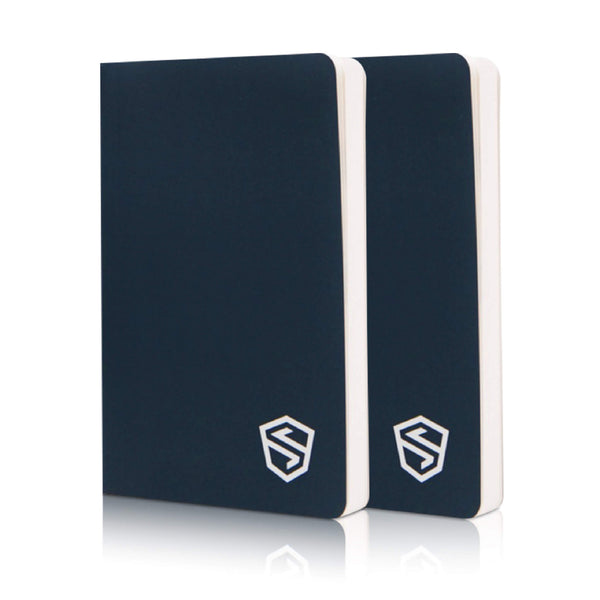
- Keep at least two complete copies in separate locations. Not fragments. Complete copies. Fragmentation is a security decision, not a redundancy strategy. A 2-pack exists for exactly this reason.
- Write a plain-language letter to whoever will do this. Assume they have never opened a wallet. Assume they are grieving. Assume the first thing they try will not work.
- Test the plan without yourself in it. Have your heir walk the retrieval path with you absent from the exercise. This is the step almost everybody skips and it is the only one that proves anything.
- Put a review on the calendar, annually. Wallets change, people move, services close. A plan you have not checked in three years is a plan you do not have.
Requirements that surface too late
These are the ones people discover after committing, usually at the worst moment.
- The PIN was never written down. Heirs receive a hardware wallet and no PIN, because the PIN lived only in the owner's head. Most devices wipe after repeated wrong attempts, so a well-meaning heir can destroy the backup by trying.
- An empty wallet looks identical to a wrong passphrase. No error, no warning, no indication anything went wrong. Your heir will assume the money is gone.
- The derivation path matters and nobody records it. The same seed phrase produces different addresses under different paths. An heir restoring into the wrong wallet software sees a legitimate, empty account.
- Exchange beneficiary processes are separate from your will. Several major exchanges now have their own inheritance forms, and their process governs regardless of what your estate documents say.
- Your attorney may not be able to help. Most estate attorneys have never recovered a wallet. Ask directly whether they have handled a self-custody estate before, not whether they handle digital assets.
- The order of the words is not obvious to someone who has never seen a seed phrase. Twelve words on a page with no numbering is a puzzle, and there are more orderings than anyone can try.
- Shares from two different backup sets do not combine. If you ever regenerated your SLIP-39 shares, the old set and the new set are incompatible even if the scheme is identical. An heir who finds both and mixes them gets a failure with no obvious cause.
What to ask before you commit to a plan
- If you died tonight, name the person who could access this. What exactly would they do first? If you cannot answer in two sentences, you do not have a plan.
- What happens to my keys if this company stops operating? Ask any inheritance service this and insist on a specific answer, not a reassurance.
- Have you personally handled a self-custody crypto estate? Ask your attorney. "We handle digital assets" is not the same answer.
- What does my heir do if the wallet opens and it is empty? If your plan has no answer, your plan has a hole in exactly the place that matters.
- When did I last test this with myself removed from the process? If the answer is never, that is the next thing to do.
When a written backup is the wrong answer
We sell notebooks, so treat what follows accordingly. There are situations where writing it down is not the right primary approach.
If you hold a large position, use multisig with a professional co-signer. Casa, Unchained, and Nunchuk all offer setups where a service holds one key and releases it to heirs after verification. This costs money annually and introduces counterparty risk, and for holdings above a certain size it is a better answer than any paper backup, including ours. The threshold where that becomes true is a personal judgment, but it exists.
If your holdings are entirely on an exchange, use the exchange's beneficiary tools. Several major platforms now have formal inheritance processes. That is a genuinely simpler path than self-custody documentation, and it is the correct answer for people who were never going to self-custody in the first place.
If you need heat resistance above all else, metal beats paper. A steel plate survives conditions that no paper product survives, ours included. The trade-off is capacity and cost. Most plates hold one or two phrases and cost several times more. If you hold exactly one seed phrase and nothing else, metal is a reasonable choice.
What a written backup does well is the thing none of the above does: it gives a non-technical person something they can read and follow. That is a documentation problem, not a cryptography problem, and it is where most inheritance plans actually break.
Where a Stonebook fits
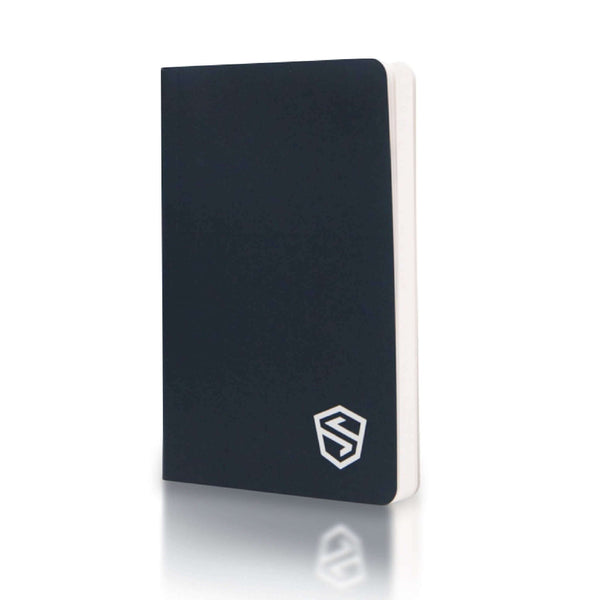
A notebook is not an inheritance plan. It is the part of the plan your heirs can actually read. The Stonebook has labeled fields and numbered boxes for each wallet, which addresses two of the failure modes above directly: an heir can see which words belong to which wallet, and in what order. It holds 50+ wallets on waterproof stone paper, and it belongs in a fire-rated safe alongside a trust drafted by an actual attorney.
If what you need is a place to write it down where somebody else could follow it later, that is what it is for. If you need any of the three alternatives above instead, use those.
The full range, including the Stonecards for keys stored apart, is on our shop page.
Frequently asked questions
Can I put my seed phrase in my will?
No. A will becomes a public court record when it is admitted to probate, meaning anyone who requests a copy from the county clerk can read whatever is written in it. Reference the existence of your crypto in the will and name who inherits it, but keep the actual access instructions in a separate secure document that the estate plan points to.
What happens to my crypto if I die without a plan?
Legally, your crypto passes to your heirs like any other property. Practically, if nobody can produce the private keys, nothing moves. There is no institution to appeal to, no password reset, and no court order that can compel a blockchain. The assets remain visible on-chain and permanently inaccessible.
Do I need a lawyer for crypto inheritance?
For anything beyond a small holding, yes. The legal side requires explicit RUFADAA authorization language and usually a trust rather than a will alone. Ask specifically whether the attorney has handled a self-custody estate before, because that experience is much rarer than a general digital assets practice.
Can my heirs recover my crypto with a death certificate?
For exchange-held assets, often yes, through the exchange's own beneficiary process. For self-custodied assets, no. A death certificate proves you died. It does not produce a private key, and no blockchain accepts one as authorization.
Is Shamir secret sharing safe for inheritance?
Properly implemented as SLIP-39, it is far safer than dividing a phrase by hand, because fewer than the threshold number of shares leaks no information. Two caveats apply: the specification deliberately cannot verify a passphrase, so a wrong one opens a valid empty wallet with no error, and the shares require SLIP-39-capable software your heirs must know to use.
Do I need to tell my family I own crypto?
They need to know it exists and where the instructions are kept. They do not need the keys while you are alive. Assets nobody knows about are never claimed, and this is the single most common inheritance failure. Our seed phrase storage guide covers where to physically keep the backup.
Can I store my seed phrase with my attorney?
You can, and it creates a different risk. You have given one third party the ability to move your funds while you are alive, and you are betting the firm still exists when it matters. A better structure keeps the attorney holding instructions or one key of several, not the complete phrase.
Does a power of attorney cover my crypto after death?
No. A power of attorney terminates at death. It is valuable if you become incapacitated and useless afterward, which surprises many people who believed it was their inheritance plan.
What is RUFADAA and does it help with self-custody?
RUFADAA is the Revised Uniform Fiduciary Access to Digital Assets Act, adopted in most US states. Under section 8, a custodian shall disclose digital assets to your personal representative unless you prohibited it or a court directs otherwise. Express consent is needed only for the content of electronic communications under section 7. Explicit authorization still helps, because custodians often demand a court order regardless. It does not reach a self-custodied wallet, because there is no custodian to serve.
How often should I review my crypto inheritance plan?
Annually, and after any major life change. Keys move, people move, services close. A stale plan is arguably worse than none because it creates confidence that is no longer warranted.
Should I write down my hardware wallet PIN?
Your heirs need it, and most devices wipe after repeated wrong attempts. Record it with the rest of the access instructions in your secure document, not on the device and not in the will.
Can I just keep everything on an exchange to make inheritance easier?
It is simpler for heirs, and it trades self-custody for counterparty risk. Several major exchanges now offer beneficiary tools. For someone who was never going to manage keys properly, that is an honest trade rather than a failure.
About the author
Freddy Hernandez is the founder of Shieldfolio, which makes physical seed phrase storage products for crypto self-custody. He has appeared on KTLA 5 Morning News discussing crypto security. Shieldfolio has shipped more than 15,000 notebooks.
Standards. We do not publish absolute security claims. We do not describe our products as fireproof, hackproof, or indestructible, because they are none of those things. Where a competing product or approach is better for a given situation, we say so.
Maintenance. This article is reviewed twice a year against the canonical SLIP-0039 specification and against current state enactments of RUFADAA. The last verified date at the top reflects an actual check, not the publication date.
Sources
- SatoshiLabs. SLIP-0039: Shamir's Secret-Sharing for Mnemonic Codes. Status: Final. Created 18 December 2017. github.com/satoshilabs/slips. Checked 30 August 2026. Supports all SLIP-39 claims: passphrase non-verification, two-level group structure, share parameters, wordlist, versioning, BIP-39 incompatibility.
- Ledger Academy. What Happens to Your Crypto When You Die: The Complete Guide. January 2026. ledger.com. Checked 30 August 2026. Supports the 2-of-3 multisig lock-out and safety deposit box court order claims.
- Uniform Law Commission. Revised Uniform Fiduciary Access to Digital Assets Act (2015). uniformlaws.org. Checked 30 August 2026. Supports RUFADAA scope and authorization requirements.
- California Legislature. AB 691 (2016), Revised Uniform Fiduciary Access to Digital Assets Act. leginfo.ca.gov. Codified at Probate Code §§870-884. Checked 30 August 2026.
- Oregon Legislature. SB 1554 (2016). Signed 3 March 2016, first state adoption of the revised act. Checked 30 August 2026.
- District of Columbia. D.C. Law 23-189, Uniform Fiduciary Access to Digital Assets Act of 2020. code.dccouncil.gov. Checked 30 August 2026. Supports the section 8 disclosure language quoted in the body.
- Pieter Wuille. BIP-0032: Hierarchical Deterministic Wallets. github.com/bitcoin/bips. Referenced by SLIP-0039 for derivation path behavior. Checked 30 August 2026.
Estate law changes by legislative session and varies by state. Technical specifications change without notice. Confirm currency before acting on anything here.
Not legal or financial advice. Shieldfolio is a manufacturer of physical storage products. We are not attorneys, financial advisors, or fiduciaries, and reading this article does not create any professional relationship. Estate planning is jurisdiction-specific. Consult a licensed estate attorney in your state before making decisions about asset transfer. We have a commercial interest in one of the approaches discussed and have disclosed it above and in the relevant section.