The largest stablecoin issuer in the world just told 570 million people to hold their own keys.
On April 14, 2026, Tether launched tether.wallet, a self-custodial mobile wallet that supports USDT, USAT, XAUT, and Bitcoin across Ethereum, Polygon, Arbitrum, and Tether's own Plasma network, plus Bitcoin natively and over the Lightning Network. The pitch, in one sentence from CEO Paolo Ardoino, is that users should be able to "send value as easily as sending a message, without giving up control of their assets."
Tether is calling it "the People's Wallet." That framing isn't just marketing fluff. Tether's technology already touches more than 570 million users across 160+ countries, mostly in emerging markets where people rely on USDT as a dollar substitute because their own currencies are unstable or because they don't have access to a traditional bank. Until yesterday, all of those users accessed USDT through exchanges, fintech apps, and third-party wallets. Now Tether is going direct to the consumer layer with a product they built, control, and ship updates to themselves.
Let's be clear about something upfront. This is good news. Genuinely good news. A company the size of Tether, with the reach Tether has, building a default wallet where the user holds their own private keys is a real win for self-custody. Not a press release win. A structural one.
It's also about to create the largest first-time seed-phrase-holder population in the history of crypto. And that is where this story gets interesting.
What tether.wallet actually is
Before we get to the uncomfortable part, let's walk through the product. tether.wallet is different from most crypto wallets in a few specific ways that matter.
It's self-custodial. Private keys stay on the user's device. Transactions are signed locally. Tether never holds the keys, never sees the seed phrase, and cannot freeze, recover, or move the funds for the user. If the user loses the recovery phrase, the funds are gone. That's the trade-off self-custody has always required, and Tether is now putting it in front of hundreds of millions of people for the first time.
It supports a deliberately narrow asset list. Four assets, total. USDT (Tether's flagship dollar stablecoin), USAT (Tether's newer US-regulated stablecoin), XAUT (Tether's gold-backed token), and Bitcoin. No altcoins. No NFTs. No memecoins. No DeFi token soup. This is not an accident. The wallet is built for people who want to hold dollars, gold, or Bitcoin and move them around. It is not built for trading, speculation, or yield farming.
The addresses are human-readable. Instead of pasting 0x424A...59D2D9, you can send funds to something that looks like an email address: name@tether. The wallet abstracts the underlying blockchain routing while still settling on public chains. This is the single biggest UX improvement in consumer crypto in years, and it directly addresses one of the most common reasons users lose funds: pasting the wrong address.
You pay fees in the asset you're sending. No need to keep ETH or POL on the side just to pay gas when you want to move USDT. If you're sending stablecoins, the fee comes out of your stablecoins. This sounds like a small thing. It is not. It removes one of the most confusing parts of the crypto experience for new users.
tether.wallet is built on top of Tether's open-source Wallet Development Kit (WDK), which has been live since late 2024 and already powered Rumble Wallet (Tether's January 2026 collaboration with Rumble that brought self-custody to 80 million Rumble users). So this isn't a v1.0 product slapped together in a quarter. The infrastructure has been battle-tested for over a year.
Why this is genuinely a big deal for self-custody
For a decade, the crypto industry has argued that self-custody is the answer to every problem with traditional finance. Not your keys, not your coins. Be your own bank. The whole movement was built on the premise that if you control your private keys, you control your money, full stop.
The problem was always distribution. Self-custody required users to download a wallet from a website they'd never heard of, write down 12 words they didn't understand, and figure out how to bridge funds from an exchange to that wallet. Most people gave up halfway. The ones who stuck with it became "crypto people." Everyone else stayed on Coinbase or Binance, with the exchange holding their keys.
What Tether did yesterday is collapse that distribution problem. They didn't ask users to seek out a wallet. They built one and put it in front of 570 million existing users. The people who never would have downloaded MetaMask now have a wallet that looks like Venmo, sends like email, and gives them full custody of their funds.
This is the same shift that happened with the Coinbase deposit address issue we wrote about earlier this week, just from the opposite direction. Coinbase represents the centralized model where the exchange holds your keys and shows you a partial address. tether.wallet represents the self-custodial model where you hold your own keys but never have to look at a 40-character address again. Both are reactions to the same underlying truth: users want simplicity, and the industry has finally figured out how to deliver it without giving up control.
That's a real win. Not a small one.
The uncomfortable question nobody's asking
Now here's the part that almost no coverage of this launch is going to talk about.
When a user opens tether.wallet for the first time, the app generates a seed phrase. Twelve or 24 words, written down on the user's screen, with a prompt to back them up before continuing. That seed phrase is the master key to every dollar, every gram of gold, and every satoshi the user will ever hold in that wallet. Lose it, and the funds are gone. Show it to the wrong app, and the funds are gone. Type it into the wrong screen, and the funds are gone.
For experienced crypto users, that's familiar territory. You've seen the phrase. You know the rules. You've probably already lost some money learning them.
For most of Tether's 570 million users, this is going to be the first seed phrase they've ever held.
Think about that number. The total number of hardware wallets sold worldwide across every brand combined (Ledger, Trezor, KeepKey, Coldcard, Foundation, BitBox, every minor brand) is somewhere around 12-15 million units across roughly a decade of sales. tether.wallet has the potential to put a seed phrase in front of more people in the next 12 months than the entire hardware wallet industry has reached since Bitcoin existed.
The infrastructure is ready. The UX is ready. The audience is ready. The one thing that is absolutely not ready is the storage layer for hundreds of millions of new seed phrases.
The part the polished UX can't hide
Tether built the wallet to feel like a payment app. Send dollars to a friend with their email-style address. Pay fees in the asset you're sending. Hold gold or Bitcoin in the same place you hold your stablecoins. None of the friction. None of the gas-token shopping. None of the address-format confusion.
That polish is what makes the product great. It's also what makes the seed phrase risk worse, not better.
When a piece of crypto software feels like a payment app, users mentally treat it like a payment app. Payment apps have password resets, customer support, fraud protection, and chargebacks. Self-custodial wallets have none of those things, by design. The seed phrase is the single point of failure. There is no "forgot password" link. There is no support team that can help you if you lose it. There is no insurance.
The same UX simplicity that's going to drive adoption is also going to drive a wave of preventable losses, because users who feel like they're using Venmo are going to store their seed phrase the way they'd store a Venmo password: maybe in a notes app, maybe in a screenshot, maybe in their email drafts, maybe written on a scrap of paper that gets thrown away.
This isn't a new problem. We saw the same pattern earlier this week when a musician lost $424,000 in Bitcoin to a fake Ledger Live app on the Mac App Store. (Full breakdown here.) That musician had been in crypto for almost a decade and knew the rules. He still typed his 24 words into the wrong screen because the screen looked official. The same thing, at scale, is about to happen to first-time self-custody users who don't even know the rules exist yet.
What every new tether.wallet user needs to do on day one
If you just downloaded tether.wallet, or if you're about to, here's the short list. None of this is optional.
Write the seed phrase down on something physical, by hand, before you do anything else. Not a screenshot. Not a notes app. Not a password manager. Not an email draft. Pen and paper. The seed phrase only has security value if it never touches a connected device after it's first displayed. The moment those words become typeable on a keyboard, the entire security model of self-custody collapses.
Verify the words you wrote down by reading them back. Most wallets ask you to confirm the phrase before they finalize the wallet. Take that step seriously. A misspelled word or an off-by-one mistake will lock you out of your funds permanently. There is no recovery from a bad backup.
Store the physical backup somewhere durable. Paper degrades. Sticky notes get lost. Pencil fades. Ink runs when wet. Your house could flood, burn, or get burglarized. The longer your seed phrase needs to last and the more value sits behind it, the more durable the medium needs to be. Options range from a stone-paper notebook for everyday backups, to engraved metal plates for fire and flood resistance, to multisig setups with geographically distributed metal backups for serious holdings. Our seed phrase storage guide walks through the full spectrum so you can match the storage tier to what you're actually protecting.
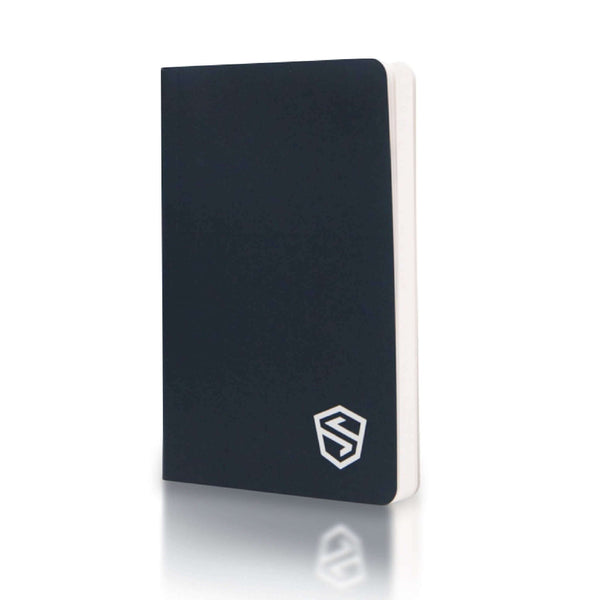
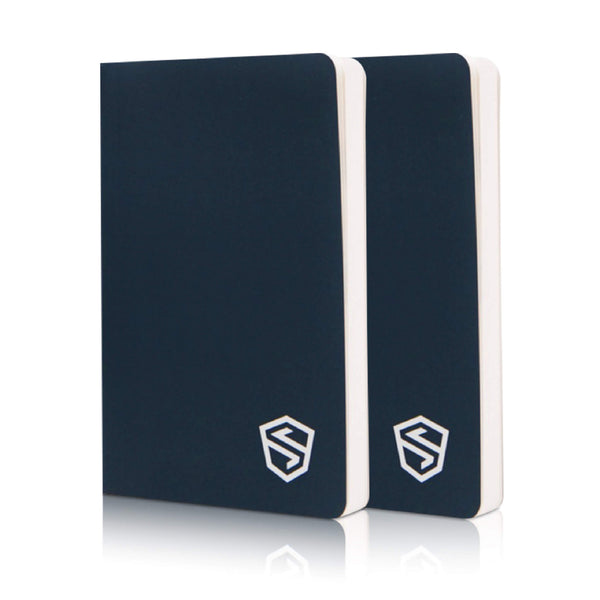
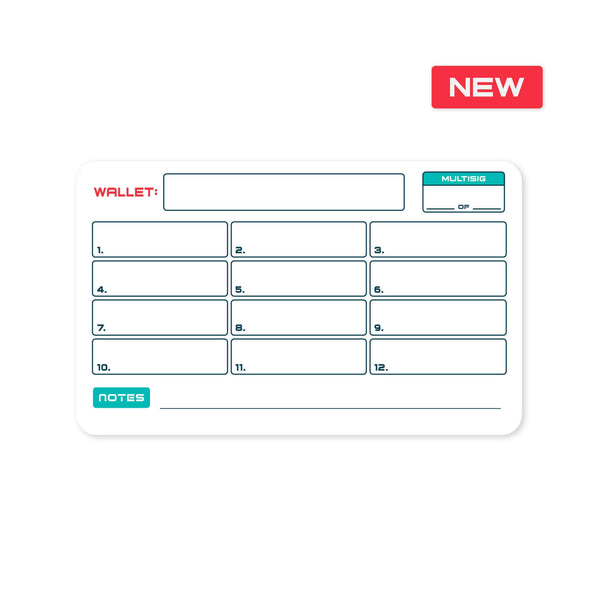
The Stonebook is what we built for the everyday-use end of that spectrum. Stone-paper pages that survive water, tears, drops, and time, with pre-printed fields for 50+ wallet backups. For larger holdings or longer time horizons, an engraved metal backup paired with a fire-rated safe is the gold standard. Many serious holders use both: a Stonebook for active reference and a metal backup locked away for long-term protection.
Never type the seed phrase into anything, ever again. Not even into tether.wallet itself if it ever asks. If a wallet app prompts you to enter your 12 or 24 words after the initial setup, that prompt is the attack. Real wallet software does not need your seed phrase after you've finished setting up. The only legitimate reason to ever re-enter it is to restore the wallet on a new device, and even then, you should be deeply skeptical of the device, the app, and the screen showing the prompt.
The bigger picture
What happened yesterday is the start of a much larger shift. Tether is the first major brand to do this at this scale, but they will not be the last. Stripe, Robinhood, Cash App, X, Telegram, Meta, and every fintech with global reach has been quietly building toward putting self-custodial wallets in front of their users. The infrastructure is ready. The regulatory pressure is mounting in favor of it. The economics work.
Within the next 12-24 months, self-custody is going to go from a niche subculture of 5-10 million crypto natives to something hundreds of millions of ordinary users encounter on their phone. Most of those users will not have read a single article about how to store a seed phrase. They will not know what a hardware wallet is. They will not know that screenshots are a bad idea. They will treat the seed phrase the way they treat any other piece of digital information their phone shows them.
This week alone, three news cycles connected to this exact problem hit the front page of crypto Twitter. A musician lost $424K to a fake Ledger app. A security researcher proved Coinbase's deposit screen hides 30 of 40 address characters and a $20 cloud GPU can fake the rest. And now Tether put a self-custodial wallet in front of 570 million people. Three different attack surfaces, three different stories, one underlying lesson: the security of your crypto is only as strong as the protection you put around the seed phrase.
tether.wallet is going to bring tens of millions of new self-custody users into the space over the next year. Whether the next decade of crypto adoption is remembered as the era when self-custody finally won, or as the era when half a billion people got burned learning the hardest lesson in finance, comes down to how those seed phrases get stored.
It's not Tether's job to solve that problem. They built the wallet. The storage is on us.
FAQ
What is tether.wallet?
tether.wallet is a self-custodial mobile wallet launched by Tether on April 14, 2026. It supports USDT, USAT, XAUT (Tether Gold), and Bitcoin (including the Lightning Network), running on Ethereum, Polygon, Arbitrum, and Tether's own Plasma network. It's built on Tether's open-source Wallet Development Kit and is positioned as a consumer-facing payment app that gives users full control of their private keys.
Is tether.wallet actually self-custodial, or does Tether hold the keys?
It's actually self-custodial. Private keys stay on the user's device, transactions are signed locally, and Tether cannot move, freeze, or recover funds for the user. The trade-off is that if the user loses their seed phrase, the funds are permanently gone. This is the same security model as MetaMask, Phantom, Trust Wallet, and other established self-custodial wallets.
What's the difference between holding USDT on Coinbase vs. holding it in tether.wallet?
On Coinbase, Coinbase holds the keys and you hold a database entry that says you own the USDT. If Coinbase fails, gets hacked, freezes accounts, or restricts withdrawals, your access to that USDT is at risk. In tether.wallet, you hold the keys directly and Tether cannot touch the funds. The trade-off is that you also bear full responsibility for the seed phrase. Lose it and the USDT is gone forever, with no customer support that can help.
Why does the wallet only support four assets?
Tether deliberately built tether.wallet for the assets they describe as the only ones that matter for most of their users: dollar stablecoins (USDT and USAT), gold (XAUT), and Bitcoin. They specifically excluded altcoins, NFTs, and memecoins to keep the wallet simple and focused on payments and savings rather than trading and speculation. Other chains and assets may be added later, but the launch focus is intentionally narrow.
What's the best way to store my seed phrase: paper, stone paper, or metal?
Plain paper works for small amounts, short time horizons, and low-risk environments. It does not work for serious storage. Paper burns, paper gets wet, paper tears, ink fades, and pencils smudge. For better durability, your two main options are stone paper notebooks like the Stonebook (waterproof, tear-resistant, built for everyday use) or engraved metal plates (the gold standard for fire resistance and very long-term storage). Many serious holders use both — a Stonebook for daily reference and active wallets, plus a metal backup of the seed phrase locked in a fire-rated safe or a deposit box. The right answer depends on how much value you're protecting and how long you need the backup to survive. The cost of any durable backup is rounding-error compared to what you're protecting.
I already use a hardware wallet. Does tether.wallet replace it?
No. Hardware wallets like Ledger and Trezor sign transactions with the private key never leaving the device, which is a stronger security model than any mobile wallet, including tether.wallet. If you already have a hardware wallet setup that works for you, tether.wallet is more useful as a payments-focused secondary wallet for moving smaller amounts around than as a replacement for your main cold storage. The two tools are complementary, not competitive.
Sources
- Tether: Official launch announcement for tether.wallet (April 14, 2026)
- CoinDesk: Tether launches crypto wallet to bring stablecoin and bitcoin payments directly to users
- The Block: Tether launches self-custodial wallet supporting USDT, bitcoin, and tokenized gold
- The Defiant: Tether Introduces Multichain Self-Custodial Wallet
- Crypto.news: Tether launches self-custody tether.wallet for USDT, gold and Bitcoin